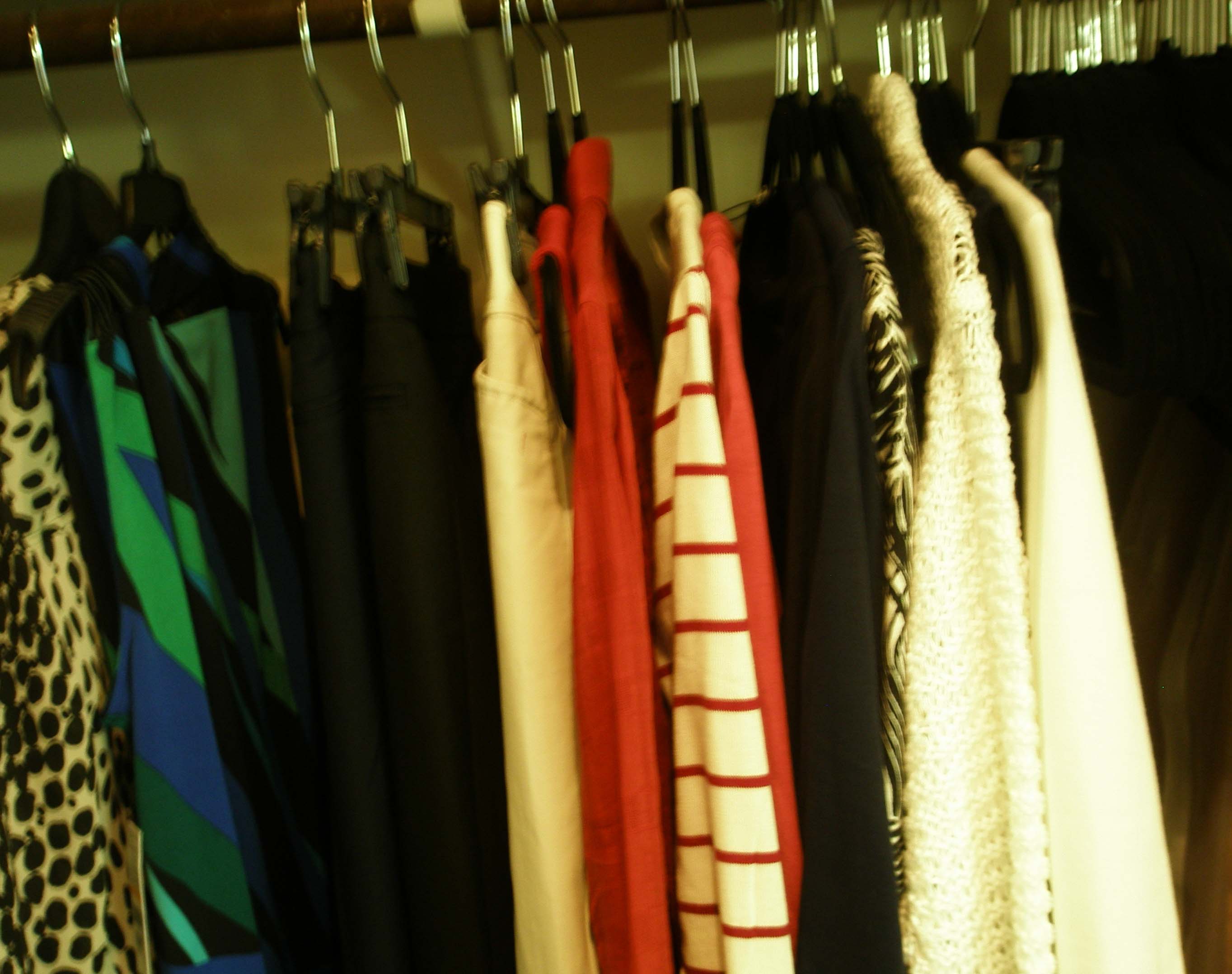
 Often, we have items in our wardrobe we will never wear or only wear once. And the next time we do put it on, we see it is out of style!
Do not purchase clothing if this is what tempts you:
1. Stay away from the latest style; wait until next year to purchase if you still like it and it is still around.
2. Do not buy it just because it was great bargain (for example, 90% off).
3. The item is too small but you know you will lose weight soon and be able to wear it.
4. You are not sure if you will ever wear it but you really like it.
5. It needs more than two alterations (more than a hem on the pants and waist alterations).
6. You don’t have an occasion to wear it yet (for example, formal wear) but you go to an event once every five years where it will work perfectly.
7. Buying shoes that look good but hurt your feet.
We all have money wasters in our closet. If you remember these tips you will have less of them.
 In today’s economic situation where the dollar needs to go a long way, purchasing quality items for your wardrobe without breaking the bank can be challenging. At the same time you need to be efficient and ensure the pieces you add support the personal brand you want to create.
Here are some tips to help you get the most for your money while continuing to create a good wardrobe:
1. Shop in your closet; look at pieces that can be worn differently to create a new look.
2. Shop during the big sales. For example, buy in the middle of this season for next year. Classic clothes never go out of style and retailers are making room for new items. That makes it a good time to shop.
3. Shop with a plan and purpose.
4. Buy only what is on your list.
5. Buy an item that you can wear with at least three others already in your closet.
6. Shop at outlets.
Remember these tips when you’re considering refreshing your wardrobe. They will help stretch your dollars while enhancing a smart wardrobe.
 A number of years ago I had a meeting with a Senior Vice-President of a large company. He arranged for me to meet his VP who I would be coaching. The VP was a Guatemalan. In his culture, personal space is nose to nose unlike in the US where one arm’s length is the accepted norm. I did not step back from him because I knew this. The fact that I understood his background was important to him and I ended up working for his group over a period of ten years before he retired.
Here are some tips about personal space:
• In the US, one arm’s length is the norm and the only time you touch someone is during the handshake.
• In Spain, people tend to stand much closer together. They also touch each other more frequently than do their US counterparts. Trying to create personal space is viewed as shyness or rudeness.
• On the other hand, Australians require extra personal space—at minimum of an arm’s length or more is typical.
 It is important when delivering a speech that the audience understands where you are taking them. You want to present correct facts/data, be passionate about your topic and convey honesty in the moment.
So many times emotions get the best of us and the message gets lost. (Listening to the speeches from the recent political conventions, it was clear both groups spoke using well thought out road maps).
Here are some keys tips to remember:
*Tell the audience up front what you want them to do
*Give them three reasons why
*Give them three steps on how to get there
Lastly, remind them of the information and what action you want them to take. If you keep these tips in mind you will always engage your audience.
How you sound is as important as the words you chose, especially in different venues.
Your voice sound and pitch needs to be different when you are:
*In front of a live audience with a microphone
*In front of a live audience without a microphone
*Presenting a webinar using a headset
If you can, record yourself. Then assess what you hear when listening to the tapes. I have a Sony audio recorder that I use to help me ensure my voice and pitch engages the audience and conveys passion in the topic.
 A combination of red and white, pink exudes the need for action conveyed by red and the insight offered by white.It is the passion and power of red softened with the purity, openness and completeness of white. The deeper the pink, the more passion and energy it exhibits. Pink in the world of fashion has been considered a color worn mostly by women.
However, over the last few years pink, in many different tones, has been popular for men as well as business women. Recently, a political commentator wore a bright pink tie with a blue plaid shirt and looked very smart. It combined the masculine with the feminine.
Pink also works well with gray, brown and dark camel. It continues to edge closer to being the new neutral worn in professional settings.
You can learn more about color by reading “The Power of Color” by Dr. Morton Walker.
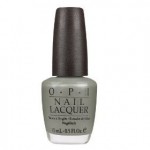 Nail polish has replaced the lipstick women bought when they felt they needed a pick-me-up. Your nail color can complete the total look.
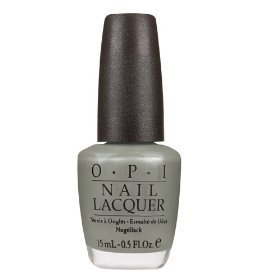
The first lady, Michelle Obama, recently wore the nail color gray. What I love about this color is that it is one of the new opaque colors. It modifies the very fashionable colors to more conservative neutrals. One of my favorite brands is OPI in nail polish. It has wide range of colors—neutrals to the vamp black shades.
The trend for new bold colors began about five years ago when some young women wore candy colors. Then we moved into the very dark colors with shorter, square shaped nails. The first lady bridged her color choice by keeping her nails a bit longer and not squaring them off. It looked perfect and smart.
 A New York Times (NYT) Sunday article featured Mario Batalli, chef, cookbook author, television personality talking about working in his kitchen. His philosophy and communication style as leader is that you do not have to shout to work with each other.
The culture in the kitchens of many restaurants is to yell to communicate. The high pressure, time sensitive, noisy environment lends itself to this.
On Tuesday, August 28, acclaimed chef, Charlie Trotter, was featured in the Chicago Tribune because his restaurant is closing on Friday. He discussed what he did to change the atmosphere and talked about chefs who became famous but may have paid a high price for that fame.
So, here we have two celebrated chefs, successful leaders in their own field and businesses, with two different styles. One style was forged twenty some years ago and the other is relatively current.
The questions to answer are what works best for you, does it benefit you and do you learn from it?
 The Williams Sisters were featured in NYT’s magazine this Sunday. They feel that belief and training is the key to their success. It’s the opposite of “Fake it ‘till You Make it”. The reason that causes us to fail is we tend not to be prepared enough in the beginning.
I remember during the first three years of my business I spoke to groups and took projects on for very little money. So, I got educated and trained at the same time. This is critical to being successful at whatever you chose to do. Training and education are first on my list to getting prepared. Then it’s on to practicing in the real world.
Does this mean you will always be a winner? No. The Williams Sisters are a great example of a career of wins and setbacks.
Motivation and love of what you do is understood but most folks who fail love what they do and don’t lack for passion. However it is the training and practice that one needs to do before going live. Even when you are successful, training and practice is still essential to ensure your success.
Ask yourself, are you continuing to believe and train in your profession?
 “You are never going to be right all the time. Get over it. The hurdles get smaller as you go along because you will be jumping over them.” Marsha Serlin, CEO, United Scrap Metal.
So many times mistakes can paralyze us. I have learned over a period of time to not beat yourself up too much because you can learn from your mistakes if you get over them.
For example, the first time I lost a project it took me a year to get past it. But it also taught me how to never be unprepared when presenting a project at a casual meeting.
About five years ago, I was faced with a similar situation. I went through a challenging hour of discussion with seven key decision makers for a project. But by then it had become a natural process to always be fully prepared.


 Often, we have items in our wardrobe we will never wear or only wear once. And the next time we do put it on, we see it is out of style!