 In this Sunday’s New York Times business section, Corner Office, “Tony Tjan, CEO and founder of Cue Ball, a venture capital firm, suggested waiting 24 seconds, 24 minutes and 24 hours before criticizing a new idea. This allows the time needed to examine all the ways it might work.
So many times in a meeting ideas and thoughts are never shared because of the fear of being rejected. If we all were to use Mr. Tjan’s system it would absolutely allow more folks to express their creativity and be open to share ideas. The results would energize the conversation and allow different and possibly even better approaches toward a solution.
 How can you determine what truly energizes you and tie that in to what you love to do professionally. It seems to be easier to know what we don’t want to do so begin with a checklist. In one column list at least 10 items you don’t like. On the other side of the column write what you are doing. If 5 of the 10 items on the I don’t like side show up put them next to the item on the what you’re doing side. Do this for a month and then reassess. This will help you get closer to what you love to do. Be patient – it can take up to a year to figure it out. In the long run you will be energized and fulfilled.
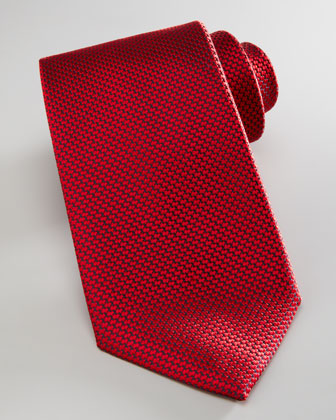
The holiday season has just begun and many retailers are hoping holiday neckties will sell through the roof. What makes a holiday tie a good one vs. one in bad taste? A solid holiday color or a small print of holiday items (Christmas holly or candy, etc.) on the tie will look elegant. Cartoon holiday ties that feature a reindeer laughing, Santa saying ho-ho-ho or a large picture of a snow man might be fun in the right business environment. However, it is risky and can be seen as showing poor taste.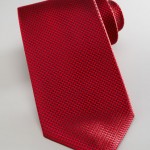
Think small prints in Christmas red or green and your holiday elegance will be on full display!
It can be hard to resist the temptation to wear ornament earrings (especially the lit ones) or reindeer ears as a head band because is fun. But don’t do it at the office. Remember that ornaments look best on a tree and reindeer ears on a dog. They can also be fun to wear at family functions.
For the professional environment, a red necklace or red scarf will appropriately ring in the holiday cheer with your wardrobe.
 The only way to become good at any task is to practice it. You can have the best speech or great talking points on an index card but if you have not actually practiced verbalizing the words, the chances of it sounding the way you want it to and being effective is about 50/50.
Think about how much athletes practice. They spent hours each day doing the same thing over and over. In fact, Geoff Colvin, in his book, Talent is Overrated, suggested that it takes a minimum of 10,000 hours of doing something to become proficient at it.
So, if you want to be good at any task always take time to practice. If you do this, the chances are that you will knock it out of the box. Otherwise you could appear stiff like Clint Eastwood and his ad lib performance at the Republican convention instead of President Bill Clinton’s rehearsed one at the Democratic convention.
 Sometimes it is hard to stay focused in meetings when you are not an active participant or the meetings are back-to-back. Keep eye contact with those around you. Take notes and ask questions when in meetings. Give yourself a quiz afterwards to remember what occurred.
Managers often tell me how they judge those in meetings by how engaged and attentive they are. Having a poker face can be another career killer in a meeting. You give the perception the meeting does not matter. However, in reality they may matter more than you realize.
 Should women get a manicure and does there have to be color on the nails? Can I wear a vamp color on my nails? Your nails should always be chip, cuticle and hangnail free. A good buff for men is appropriate. Color for women should be neutral. The visual story you want your hands and nails to display is a fresh, clean and neat look that says I am healthy and youthful.
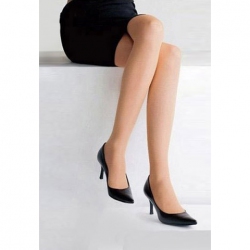
This issue keeps coming up whenever I am speaking to a group of professional women – to wear hose or not. Again, many companies, especially when it gets warm, have no opinion about whether women should or should not wear hose. Even as the temperature gets cooler they still leave it up to the wearer.
There are still women who like to wear hose no matter what the situation or the climate. And of course, there are women who don’t like to wear hose in any business situation. My opinion is that legs should not appear naked. This means that there are some legs that look great without hose. Others, not so good. So, unless the organization has guidelines about wearing hose, it is up to the wearer.
I do have two rules about hose, though. Never wear white hose unless you are a nurse and sheer black hose can be worn all year round.
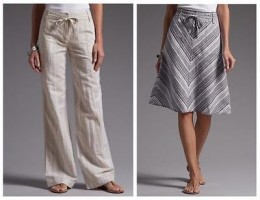
 It has been only in the past few years that pants for women have become acceptable business attire. In most formal business situations (dependent on the industry and geography) suits with skirts are still the uniform. Business casual made pants for women acceptable. But is the skirt actually replacing pants for women? Sure, wearing a skirt would show you are wearing the current fashion style but does it make you appear more professional? My opinion is that women are wearing more skirts because the fashion industry has made them easy to wear. Plus, there are more shoe styles available to compliment them. What matters the most is which (pants or skirts) makes you feel more comfortable and how each one makes you feel.
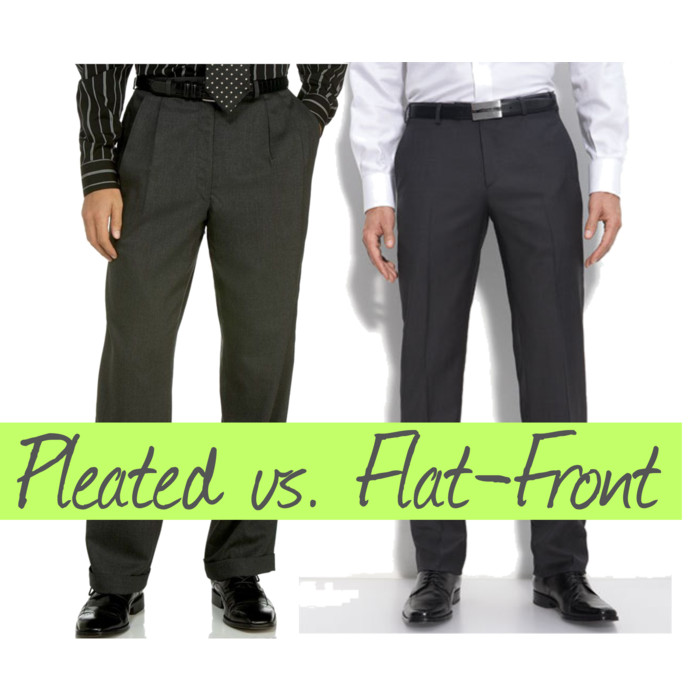
 Recently a good male friend of mine was very happy he could find a pair of slacks with pleats. Not everyone can wear pleated pants and some guys just look better in flat front pants. The fashion industry for men in the past has moved very slowly. Not anymore. There are more choices than ever for men including pleats, no pleats, cuffed or no cuff pants.
So, regarding fashion trends for men—in the financial arena men still tend to wear pants with pleats and cuffs. In the service and product industries men usually wear flat front pants without cuffs. Formal presentations and sales calls typically mean cuffs and pleated pants.

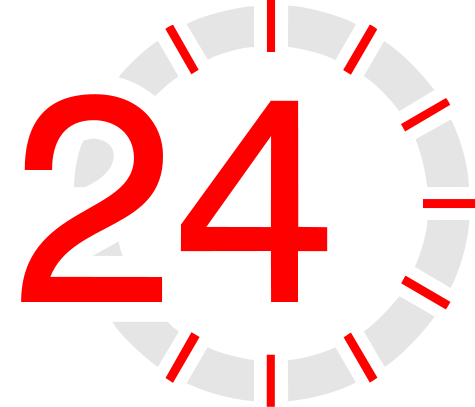 In this Sunday’s New York Times business section, Corner Office, “Tony Tjan, CEO and founder of Cue Ball, a venture capital firm, suggested waiting 24 seconds, 24 minutes and 24 hours before criticizing a new idea. This allows the time needed to examine all the ways it might work.